What to Wear with Kitten Heel Ankle Boots: Five Autumn Outfits
Published 15 October 2026
Published 12 August 2026
Wide feet and hand-knotted leather sandals: here's what actually matters before you buy.
Thin, rigid straps are the real problem: they concentrate pressure onto one thin line of skin, and your forefoot spreads by several millimetres with every step — a stiff strap has no answer for that.
Hand-knotted leather spreads the load: dozens of individually knotted strands share pressure across the top of the foot instead of one seam taking it all, and the leather gently moulds to your foot's shape over time.
It's not a wide-fit shoe: the Tessa Sandal is cut true to size on a standard last. If you're between sizes, size up — but don't size up purely for width, or your foot will slide forward instead.
Look for three things in any sandal: continuous coverage over the widest part of the foot, a material with honest give, and a secure hold so your foot can relax instead of gripping all day.
The Tessa Sandal takes real time: approximately 7 hours of hand-knotting per pair, in LWG-certified leather, £125, in Black, Chocolate and Tan.
Good sandals don't just tolerate a wider foot — they distribute pressure so evenly you stop thinking about your feet at all.
There is nothing quite like stepping out on a warm British morning in open-toed shoes — and nothing that ends the mood faster than a strap digging in before you reach the end of the road. If your feet run wide, or swell in summer heat, you've probably learned to treat sandals with caution. This is an honest guide to whether hand-knotted leather sandals genuinely help a wider foot, what they can and can't do, and how to get the fit right first time — including the truth about our own Tessa Sandal, which takes approximately 7 hours of hand-knotting per pair.

Most sandal discomfort comes down to surface area. A narrow, rigid strap concentrates the pressure of every step onto a thin line of skin. Multiply that by the several thousand steps in an average day and you get friction, then soreness, then blisters.
There's a second, less obvious culprit: your foot changes shape as you walk. Each time you bear weight, the forefoot spreads — the metatarsal joint just below your toes widens by several millimetres. A strap that felt fine in the fitting room at ten in the morning can feel unforgiving by mid-afternoon, particularly in warm weather, when feet naturally swell. Rigid uppers have no answer to this. They hold one shape; your foot does not.
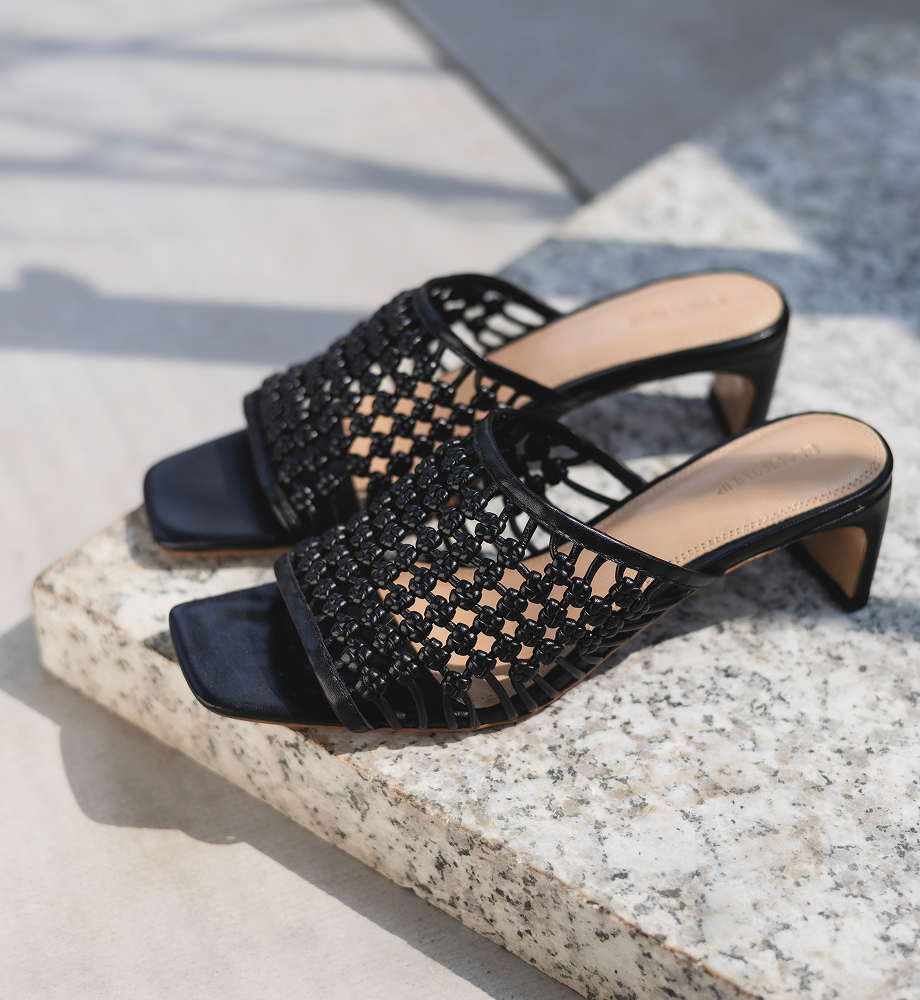
Coverage: instead of one or two thin straps, dozens of individual leather strands — hand-knotted, strand by strand — share the load across the top of the foot, so no single line of skin takes the pressure.
Give: leather is a natural material, and this construction flexes at many points rather than hinging at one seam. With wear, it gently moulds to the particular shape of your foot. That's the honest reason hand-knotted uppers have a reputation for all-day comfort — and why searches for woven sandals climb every summer among women whose feet sit at the wider end of standard sizing.
One caveat: that give is gradual and subtle. It's a moulding process, not a stretching trick, and it does not turn a standard-width shoe into a wide fit. Which brings us to the part most brands skip.
Black Tulip does not make a wide-fit shoe. The Tessa Sandal is cut true to size on a standard last, and we'd rather say that plainly than let a headline imply otherwise. If you're between sizes, size up. What the hand-knotted leather upper offers a wider foot is real but modest: even pressure distribution from the first wear, and a gentle moulding to your foot's shape over the wears that follow.
A sizing note worth knowing: going up a full size purely to gain width rarely works in any sandal. You gain length you don't need, the foot slides forward, and the toes press against the front — trading one discomfort for another. Size up only if you're genuinely between sizes.
If you know you need a dedicated wide fit, our earlier guide to choosing sandals for wide feet covers the wider market. This guide is narrower on purpose: it's about how hand-knotted leather behaves on the foot, and whether that behaviour suits you.
The upper should cross the metatarsal joint as one flexible panel, not with a hard seam directly over the joint. A seam at the widest point is where pinching starts, because that's precisely where the foot needs to spread with each step.
Leather moulds; most synthetics do not. Construction matters as much as material: an upper that flexes at many points — as a hand-knotted upper does — will follow the foot far better than a single stiff band, however soft its lining.
If a sandal relies on your toes gripping to stay on, the muscles of the foot stay tensed all day, which is its own kind of ache. A secure ankle strap lets the foot sit settled and neutral. And check the footbed against your foot: if your foot spills over its edge, no upper — however forgiving — can compensate.
The Tessa Sandal is the shoe this guide keeps returning to, because it's built on exactly these principles. Each pair takes approximately 7 hours of hand-knotting: LWG-certified leather, hand-knotted strand by strand into a continuous, flexible upper that covers the front of the foot without a hard seam. A secure ankle strap keeps the foot settled; the profile is low and elegant. It was designed in London, drawing on three generations of shoemaking craft, and launched in June 2026 as the founding piece of our hand-knotted range — the rest of which lives in the Woven collection.
It's £125 and comes in three colours: Black, Chocolate and Tan. Tan is the natural partner to linen trousers and cotton poplin; Chocolate sits beautifully against cream and sand tones; Black carries a midi dress into the evening without a change of shoe.
The moulding that makes hand-knotted leather rewarding is a process, so give it a fair start:
Begin at home: wear your new pair indoors for twenty to thirty minutes over two or three evenings. The leather begins taking your foot's shape at exactly the points where you need it to.
Protect pressure points early: a little anti-chafe balm on the back of the heel and the sides of the toes for the first few full days out is quiet insurance.
Let time do the work: by the third or fourth wear, the upper has begun to settle into the contour of your foot. That's the shape it keeps.
Wide feet don't need a wide-fit sandal to feel comfortable — sometimes they just need a construction that shares the load properly. Hand-knotted leather does that honestly: not by stretching to fit, but by distributing pressure evenly from the first wear and moulding gently over time. Order true to size, size up only if you're between sizes, and give the leather its first few wears at home. That's the whole trick.
Shop the Tessa Sandal