Shopping Bag
(
0
)


British feet keep expanding because of obesity, better nutrition, and age - this creates a real problem when you're trying to find shoes that actually fit.
British feet grew two full shoe sizes since the 1970s: More than half of women and a third of men now squeeze into shoes that don't fit properly.
Extra weight changes your foot shape permanently: Carrying more weight stretches the ligaments in your feet and flattens your arches, making feet spread longer and wider.
Pregnancy leaves lasting foot changes for 60-70% of women: Your first pregnancy often flattens arches permanently and makes feet longer, forcing you into bigger shoe sizes.
Shoe widths vary wildly between UK brands: There's no standard width chart, so you'll need to try different retailers to find shoes that actually fit.
More shops now stock bigger sizes: High street stores like ASOS and Next plus online specialists finally offer extended sizing and wide-fit options.
Bigger feet aren't going anywhere - this change affects British shoppers permanently. Forget what size you think you wear and focus on finding shoes that actually fit your feet.
British feet keep getting bigger - the average foot grew two shoe sizes since the 1970s. This affects how you shop for shoes, because more than half of women and a third of men now wear shoes that don't fit.
Multiple factors cause bigger feet: better nutrition that increases height, rising obesity rates, and weight gain that stretches foot ligaments. This guide covers when your feet stop growing, whether feet can shrink with age, and how British sizing differs from American sizing. You'll also find out where the UK's ergonomic and wide-fit shoe demand is heading, plus where to actually find trainers that fit your changing feet.

British feet are expanding for reasons that connect to how we live now. The College of Podiatry research shows weight gain puts extra pressure on feet, making ligaments and joints work harder to hold foot structure together. This pressure makes feet splay outward to handle the extra load, creating increases in both length and width.
Lorraine Jones from the College of Podiatry puts it simply: when a nation gets taller and heavier, feet adapt. The numbers back this up. About 41% of women and 26% of men say their feet grew larger even after everything else stopped growing. Extra weight hits your feet hard. Every step you take forces your feet and ankles to absorb roughly 120% of your body weight, jumping to 275% when you run. This constant pressure stretches the connective tissue in your feet, flattening and spreading them.
Living conditions improved over decades, especially nutrition and disease prevention, pushing average height up across generations. Foot size links directly to body size, particularly height and weight. Historians actually use height to measure how well people lived, and the quick rise in average height during the 1900s shows major improvements in health and nutrition.
Weight gain creates specific changes in your foot structure. The tendons and ligaments connecting the small bones in your feet stretch when you gain weight. These tissues lose their snap-back ability, making your toes spread and your arch drop. Your body tries to adapt by changing how you move, often making you lean forward and put weight on the wrong parts of your feet.
Fat pads on your heels and balls of your feet work like built-in cushions. You lose almost half of this fatty padding by age 50. When these fat pads shrink, your feet flatten and spread more. Extra weight adds fat inside foot structures while messing with fat pad placement, creating uneven pressure distribution across your sole.
Your feet don't just grow during childhood then stay the same forever. Life happens to your feet - pregnancy, weight changes, and getting older all reshape them in ways that catch most people off guard.
Girls see their feet reach full size around 13-14, while boys keep growing until 16-18. Boys hit growth spurts later, so their feet keep expanding longer. Most people max out on foot growth by 20 or their early twenties. But bone growth stopping doesn't mean your feet stay the same size.
That first pregnancy does more than just make you tired - it permanently drops your arches and can make your feet longer. About 60-70% of women end up with bigger feet after pregnancy. One study tracked 49 women and found 30 had longer feet (usually 2-10mm more), while 35 saw their arches drop by 1-5mm. Roughly 30-40% of women need bigger shoes permanently after having kids. Extra weight plus looser ligaments during pregnancy create changes that stick around.
Here's something that surprises people: feet don't get smaller as you get older. You lose some fat padding on your soles, but you're more likely to need bigger shoes, not smaller ones. Feet feeling smaller usually means you've lost weight. Your foot bones stay the same size, though you might lose some fat and swelling.
Lose enough weight and your foot ligaments tighten back up, which can shrink your shoe size. Drop significant weight and you might go down a full size. Less weight means less foot pain, less swelling, and better blood flow too.
Black Tulip trainers work well for feet that have changed over time. They're built to handle wider, flatter feet that come with age and life changes. The design gives your feet proper support even when ligaments start getting looser.
Shoe width in the UK follows a letter-based system that changes completely depending on whether you're shopping for men, women, or children. Most people expect sizing to work the same way everywhere, but that assumption leads to plenty of frustration at the checkout.
Women's shoes start with C for narrow fitting, move to D for standard fitting, then E for wide fitting, EE for extra-wide fitting, and EEE for ultra-wide fitting. Men's sizing uses an entirely different scale: E equals narrow fitting, F represents standard fitting, G indicates wide fitting, and H denotes extra wide fitting. Children's shoes follow yet another system where D marks very narrow, F indicates standard fitting, G means wide fitting, and H represents extra wide fitting. Most high street retailers stock only D width fitting as standard, with E fitting being the widest commonly available. Shoes requiring EE, EEE, or beyond typically need specialist retailers.
Men's US sizes typically run one size larger than UK sizes, while women's US sizes are usually two sizes larger. Width designations also differ, with American brands commonly using D as standard width for men, whereas UK brands use either E or F as their standard.
No universal width chart exists across footwear brands. One manufacturer's E width can feel like a D in another brand. Feet vary in volume, instep height, forefoot width, and heel narrowness, which a single measurement cannot capture.
Stand on paper and trace your foot while distributing weight evenly. Measure the widest part, typically across the ball of your foot. Measure at day's end when feet are naturally swollen.
Black Tulip trainers recognize these sizing challenges and offer thoughtfully designed width options that accommodate the reality of British feet. Their flexible leather uppers and rounded toe boxes provide genuine comfort without requiring you to navigate confusing width letter systems.
Your feet have changed, but finding trainers that acknowledge this reality takes some know-how. The good news? Retailers finally recognize that British feet need more space, and options exist if you know where to look.
Next stocks most shoe ranges up to Size 9 (43), offering statement sandals, heels, flats, trainers, and boots. River Island provides many trendy styles in wide-fit or size 9 (42). ASOS carries an impressive range with many styles extending to size 13. Office offers women's shoes up to size 13, while Marks & Spencer maintains a well-known wide-fitting range from everyday basics to occasionwear.
Nearly 88% of women wear shoes too small for them, and searches for wide-fit shoes have increased consistently over the last decade. Wide Fit Shoes targets customers for whom discovering properly fitting shoes has been revelatory, allowing them to commute comfortably or take up previously off-limits hobbies.
Black Tulip offers women's trainers featuring leather outer and inner construction with memory foam insoles. Their Willow All-Day Trainers include a lightweight, flexible sole designed for all-day comfort, running slightly small so most customers size up. At £125, these trainers withstand rain, winds, and mud without showing wear.
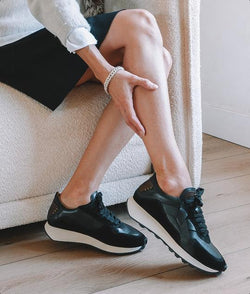
The Black Tulip arbi sneakers deserve special mention for their approach to the changing British foot. These trainers recognize that comfort shouldn't require compromise on style. The arbi collection features adaptive sizing that accounts for the width increases many British women experience, while the sleek black design works equally well for weekend walks or casual office days. The flexible construction adapts to foot swelling throughout the day, making them particularly valuable for those whose feet have changed size due to weight fluctuations or pregnancy.
Jimmy Choo's standard sizing runs from 34 to 43, with some styles available up to 45, reporting a 14% increase in sales for sizes 43 to 45 in 2025. Manolo Blahnik now designs from size 33 to 43. New Balance provides wide fit options in 2E, 4E, and even 6E widths.

British feet continue to grow larger due to rising obesity rates, better nutrition, and natural aging processes. Standard sizing no longer works for most people, with more than half of women wearing ill-fitting shoes. Fortunately, retailers now recognize this shift and offer wide-fit options that accommodate your changing foot dimensions.
Black Tulip trainers address these modern foot needs with ergonomic designs, flexible leather construction, and memory foam insoles. Their thoughtful approach to width and comfort means you won't have to sacrifice style for proper fit. When you invest in trainers that truly accommodate your feet, you're making a choice that supports long-term foot health and all-day comfort.
Shop trainers built for changing feet
What is the average shoe size in the UK?
The average men's shoe size in the UK is a size 9, while the most popular women's size is a 6. However, these averages have been increasing over recent decades, with British feet growing by approximately two shoe sizes since the 1970s.
Do feet continue to grow after age 35?
Feet typically stop growing in length by your early 20s, but they can still change size throughout adulthood. Factors like weight fluctuations, spending more time barefoot (which allows feet to spread naturally), and loosening ligaments can cause your feet to become wider or longer, requiring larger shoe sizes even in your 30s and beyond.
Why do different shoe brands fit differently even in the same size?
There is no universal standard for shoe sizing across brands. A size 9 in one brand may fit like an 8.5 or 9.5 in another because manufacturers use their own interpretations of UK sizing. Shoes made in different countries often vary significantly, which is why it's helpful to focus on EU sizing for more consistency.
Can losing weight make your feet smaller?
Yes, significant weight loss can reduce your shoe size. When you lose weight, there's less pressure on your feet, which reduces the stretch in tendons and ligaments. Many people find they can go down a full shoe size after substantial weight loss, as their feet become less swollen and the tissues tighten.
Why do feet spread and get wider with age?
As you age, the ligaments in your feet naturally loosen, causing arches to flatten and feet to spread wider. Additionally, you lose fatty padding on your heels and the balls of your feet—up to half of it by age 50—which contributes to feet becoming flatter and wider. Weight gain, pregnancy, and spending more time barefoot can also accelerate this spreading process.
Bestsellers