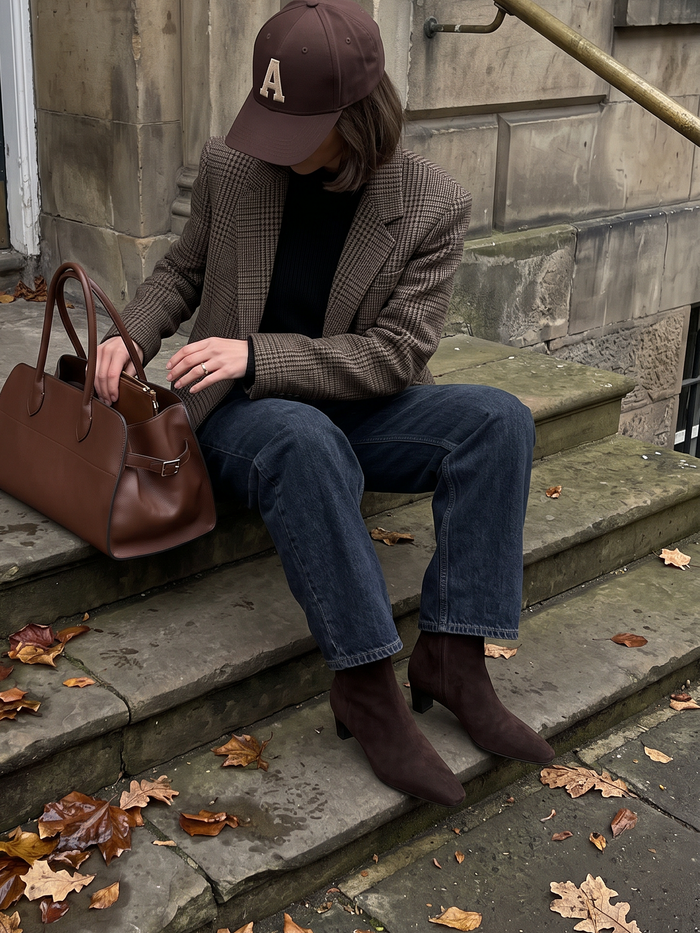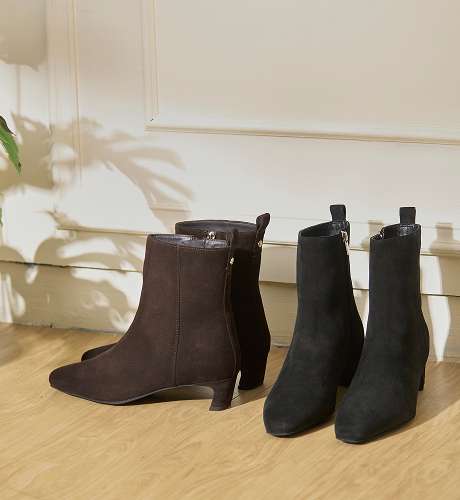
What to Wear with Kitten Heel Ankle Boots: Five Autumn Outfits
Published 15 October 2026
Published 29 August 2026
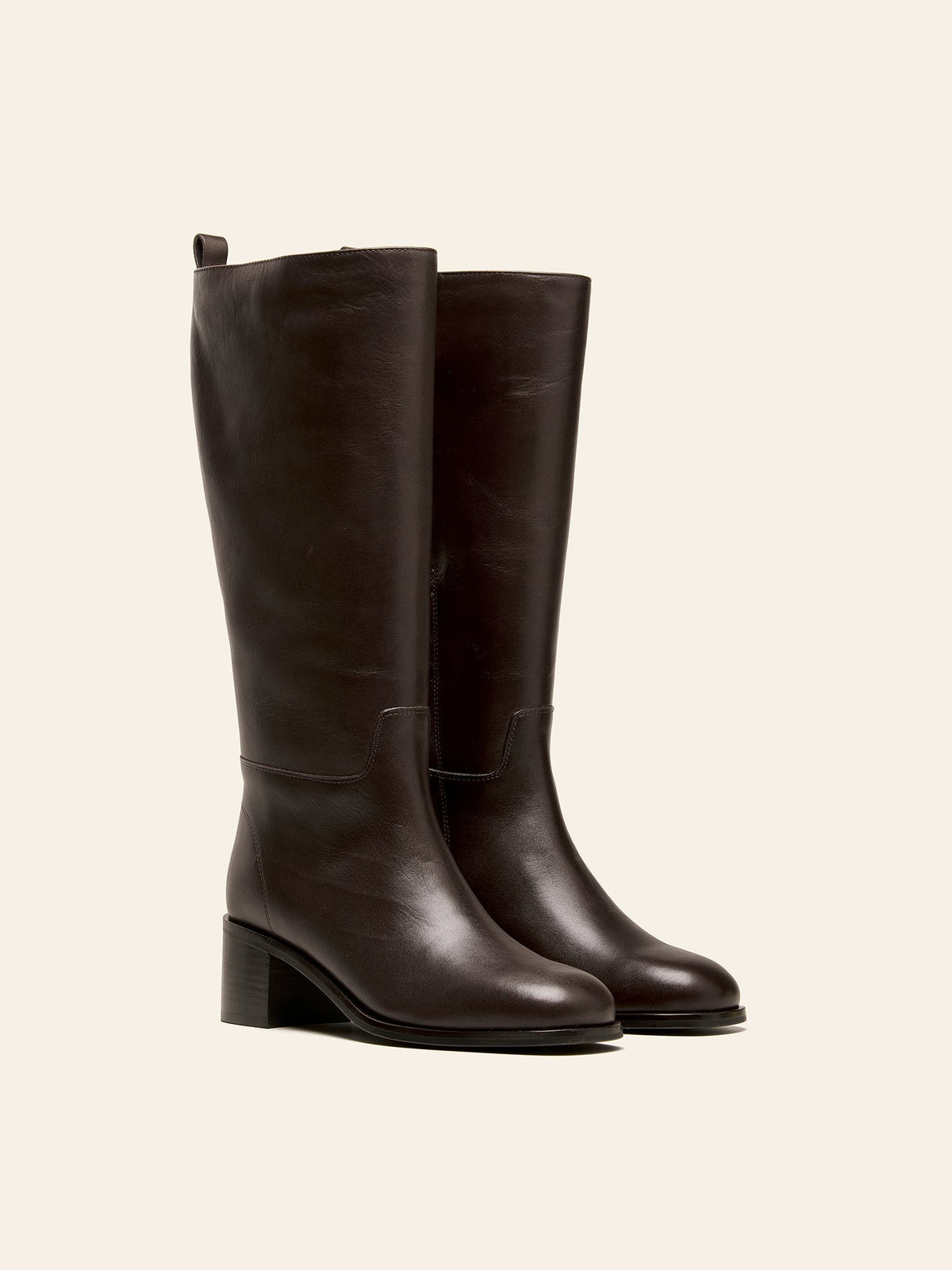
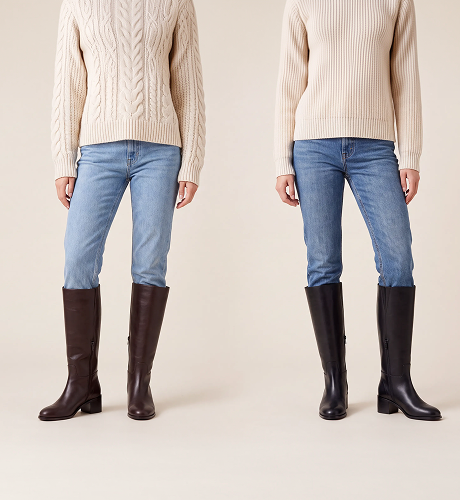
Leather knee boots for a UK winter come down to the leather, the calf measurement and the heel. Black Tulip's Maple Knee Boot is full-grain leather in Black or Chocolate, cut to sit just below the knee on a 56 to 58 mm block heel, with a short inside zip. Each size's calf measurements are listed in millimetres.
A knee boot is the biggest footwear decision of the cold months: the most leather, the most wear, the most visible in every outfit it touches. It is also the purchase where quality gaps show fastest — a cheap knee boot slouches, creases and sags at the ankle by January. Here is what to check before you buy.
Over that much surface area, leather quality is impossible to hide. Full-grain leather holds the boot's line season after season and takes on character where coated splits crack; suede wants more upkeep in wet months. Whatever the finish, the shaft should feel substantial without being stiff — pinch it: it should fold slowly and recover, not collapse like fabric.
Most knee-boot disappointment is calf fit. The Maple Knee Boot's product page lists two calf measurements for every size, in millimetres: the circumference at the top of the shaft and at mid shaft. Standing, measure around the calf at the same two heights and compare each with the figures for the size you choose. Height matters too: the shaft should finish two to three fingers below the back of the knee. Any higher catches when you sit; any lower reads as a tall ankle boot.
The Maple Knee Boot has a block heel: 56 mm at UK 3 to 5 and 58 mm at UK 6 to 8, and the heel height for each size is listed in millimetres on the product page. A block heel is broad and square in section rather than tapered to a point.
Straight skirts and knitted dresses with opaque tights; wide-leg trousers worn over the shaft; slim denim tucked in. If the dress is more formal, our guide to wearing boots with dresses settles the question — the short answer is yes, with the right boot.
Torn between Black and Chocolate? Our guide to choosing Black or Chocolate boots, with outfits for each colour sets out which one suits which wardrobe.
Shop footwear built to last